
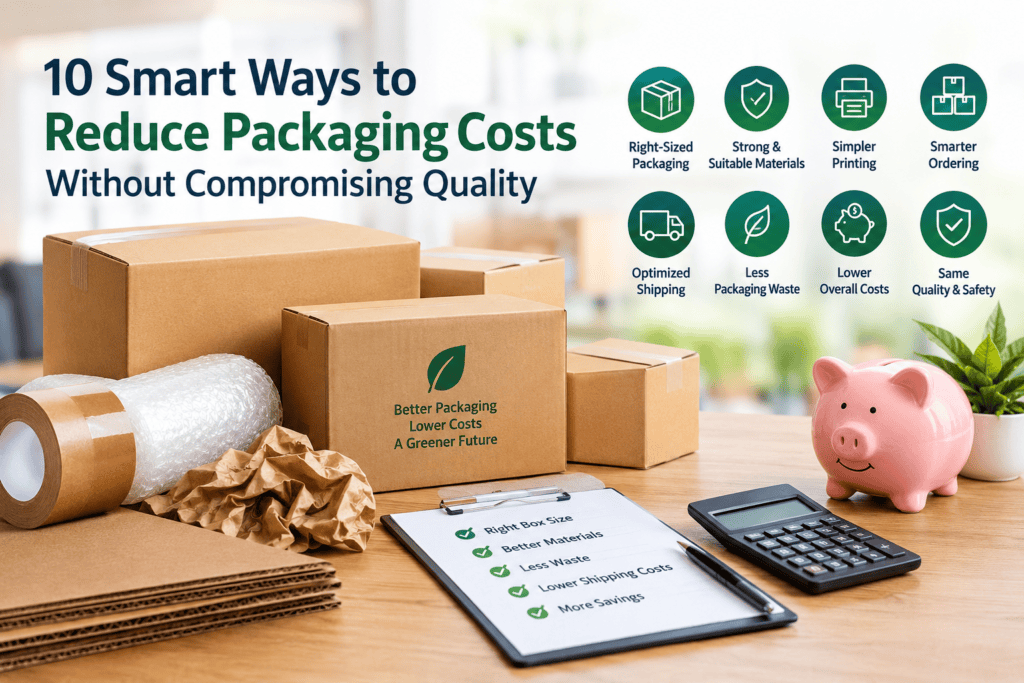
10 Smart Ways to Reduce Packaging Costs Without Compromising Quality
Every business wants to reduce packaging costs. But buying the cheapest box is not always the best answer. A cheap box can become costly if it damages products. It can also lead to more filler, higher shipping costs, and more customer returns. A better approach is packaging cost optimization. Look at the full packaging process, not just the box price. Box size, material, printing, order quantity, storage, shipping, and product safety all affect your total cost. Here are 10 practical ways to reduce packaging costs while keeping your products safe and your packaging quality strong. 1. Choose the Right Box Size One easy way to reduce packaging cost is to avoid paying for empty space. A large box uses more cardboard. It may also need more filler. It can take up more storage space too. Some carriers may also charge more when a package takes up more space. Measure your most common products before choosing your box size. The box should have enough room to protect the product. It should not have large empty areas. Right-sized packaging can create packaging cost saving in several ways. You may use less cardboard and less filler. You may also need less storage space and packing time. 2. Match Box Strength to Your Product The strongest box is not always the best choice for cost-effective packaging. A light product may not need the same box strength as a heavy product. But a box that is too weak can lead to damage and replacement costs. When choosing corrugated packaging, look at the product weight, size, stacking, handling, transport, and storage. Ply matters, but it is not the only factor. Paper quality, flute type, and box design also affect box strength. Choose a box that fits the actual job. This can help you reduce packaging expenses without reducing the protection your product needs. 3. Plan Your Packaging Orders Order planning can also help you reduce packaging costs. Some businesses place small orders every few weeks. This may mean paying setup, printing, tooling, or other fixed costs more often. Planned orders can spread these costs across more boxes. This may improve the cost per unit. Start by checking how much packaging you use each month. Then estimate what you may need for the next few months. If your demand is steady, talk to your supplier about planned orders. You may also be able to arrange deliveries in smaller batches. This can help you manage stock without filling your warehouse. 4. Reduce the Number of Box Sizes Many businesses use more box sizes than they need. A company may use eight or ten sizes even when some products could use the same standard box. More sizes can make buying, storage, and stock control harder. Review all your current box sizes. Look for sizes that are very similar. Some of these sizes may work well as one standard box. This can increase the quantity ordered for each standard size. Fewer box sizes can make your packaging process easier. It can also support better packaging cost optimization over time. 5. Keep Your Printing Simple Good packaging does not always need heavy printing. A clear logo, brand name, and simple design can still make a box look professional. You do not need to cover every part of the box with graphics. Depending on your order size, artwork, material, and printing method, simpler printing may help you reduce packaging costs. This does not mean removing your branding. It means choosing the printed elements that matter most. A simple design can communicate your brand while keeping production costs under control. 6. Reduce Void Fill Void fill includes materials such as kraft paper, bubble wrap, and air pillows. These materials can become a hidden packaging expense. If you ship thousands of orders, even a small amount of extra filler can add up. To reduce packaging costs, first find out why you need so much filler. Is the box too large? Does the product move around inside it? Could a better box size solve the problem? A better-fitting box can keep the product more stable. It may also reduce the amount of filler needed. This can lower material costs and save packing time. 7. Review Your Material Choices The cheapest packaging material is not always the best choice. Think about what your product needs. Look at its weight, size, handling, transport, storage, and protection needs. Corrugated packaging can offer a useful mix of strength, low weight, and recyclability. But the right specification depends on the product and how it moves through the supply chain. If you want to reduce packaging costs, do not look only at the lowest material price. Businesses using plastic packaging should also understand the applicable plastic waste management requirements. Ask a better question: What packaging setup can protect my product without adding unnecessary cost? This approach can support long-term packaging cost saving. 8. Include Damage and Returns in Your Cost The box price is only one part of your packaging cost. Suppose you save ₹2 on every box. If that box causes more damaged shipments, the saving may disappear. You may then have to replace the product. You may also pay for return shipping, refunds, repacking, and extra customer support. Look at products that have frequent damage or returns. Check whether the packaging is part of the problem. A stronger or better-designed box may cost a little more. But it may reduce bigger costs later. Good packaging cost reduction means reducing waste while still protecting the product. 9. Review Your Supplier Strategy Your supplier can also affect your ability to reduce packaging costs. Using several suppliers can sometimes give you lower prices. But it can also create more deliveries, more communication, and different quality levels. You may also order smaller quantities from each supplier. Where possible, review whether one capable supplier can help you reduce packaging costs. Do not compare suppliers only by unit price. Also check: A supplier who understands your needs may find ways to improve packaging cost